
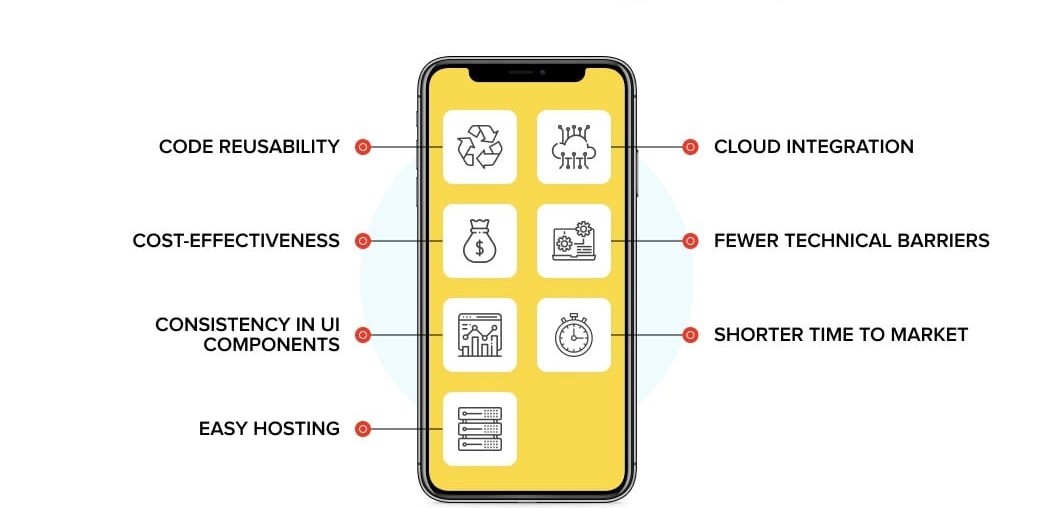
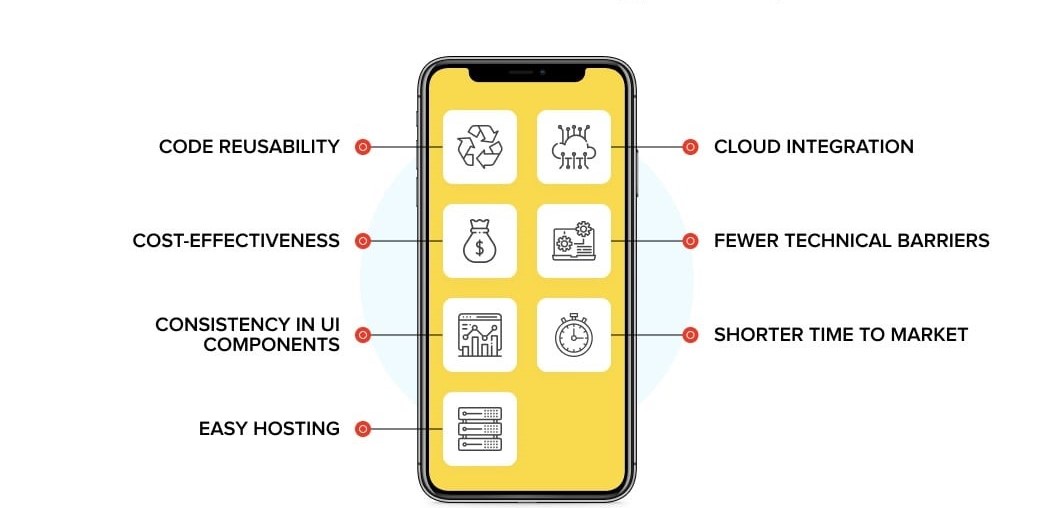
Cross-platform development allows you to build one mobile app that works seamlessly on both Android and iOS, using a single codebase. With powerful frameworks like Flutter and React Native, businesses can develop apps faster, more affordably, and with consistent user experience across platforms.
In today’s mobile-first world, users expect fast, intuitive, and accessible apps — no matter what device they use. For startups, e-commerce platforms, fintech solutions, and enterprise systems, having a presence on both major mobile platforms is essential to compete and grow. Cross-platform development offers a strategic advantage by simplifying the development process without sacrificing quality or reach.
Key Benefits of Cross-Platform Development
1. Faster Time-to-Market
Build once, deploy everywhere. By reusing code, you can launch your app on both platforms at the same time speeding up feedback cycles and updates.
2. Cost Efficiency
Maintain one development team and one codebase. This significantly reduces both development and ongoing maintenance costs.
3. Easier Maintenance
Bug fixes and updates are made once and applied across both platforms, making your app easier to manage and scale.
4. Consistent User Experience
Frameworks like Flutter ensure a uniform look and feel across devices, giving users a seamless experience regardless of their platform.
5. Broader Market Reach
Launching on both the Google Play Store and Apple App Store from day one means you instantly expand your audience.
Challenges of Cross-Platform Development
1. Limited Access to Native APIs
Some platform-specific features may require writing native modules, which adds complexity.
2. Performance Limitations (in Some Cases)
For graphically intensive applications like games or AR/VR, native development can still provide better performance.
3. UI/UX Consistency Can Be Tricky
Maintaining a truly native feel across platforms might require manual adjustments to match platform conventions.
4. Tooling & Library Support Gaps
Not all third-party libraries or SDKs are fully supported by cross-platform frameworks, which can slow down development.
5. Larger App Size
Apps built with cross-platform tools can sometimes have a larger file size, which might affect download rates and storage.
When Should You Use Cross-Platform Development?
Consider cross-platform mobile development if:
- You want to launch fast and on a budget
- You’re building an MVP (Minimum Viable Product)
- You need a consistent user interface across Android and iOS
- You don't rely heavily on platform-specific features
Why Partner with CODE.ID?
At CODE.ID, we’ve helped startups, enterprises, and e-commerce brands launch powerful mobile apps using Flutter and React Native. From ideation to post-launch support, we provide end-to-end services tailored to your business goals.
Our services include:
- App strategy & consultation
- UX/UI design
- Full-cycle development
- App store deployment
- Ongoing support & updates
Ready to Build Smarter?
Stop wasting time and budget on inefficient app development. With CODE.ID, you get a trusted tech partner to build powerful, scalable mobile apps for Android and iOS in record time and at optimal cost.
📞 Contact us: +62 813-9971-0111
🌐Learn more: https://www.code.id